When I first stepped into the Western Frontier in 2026, the skepticism that had followed Avatar: Frontiers of Pandora since its 2017 announcement felt like a distant rumor. Massive Entertainment did not simply paint an open world over James Cameron’s universe; they wove the game together like a mat of bioluminescent roots beneath the soil, each system feeding the next so quietly that the entire world begins to breathe. The result is not just a polished adaptation, but a place where scenery, combat, movement, and discovery all feel like parts of one living organism.
A Net of Collectibles That Avoids the Chore
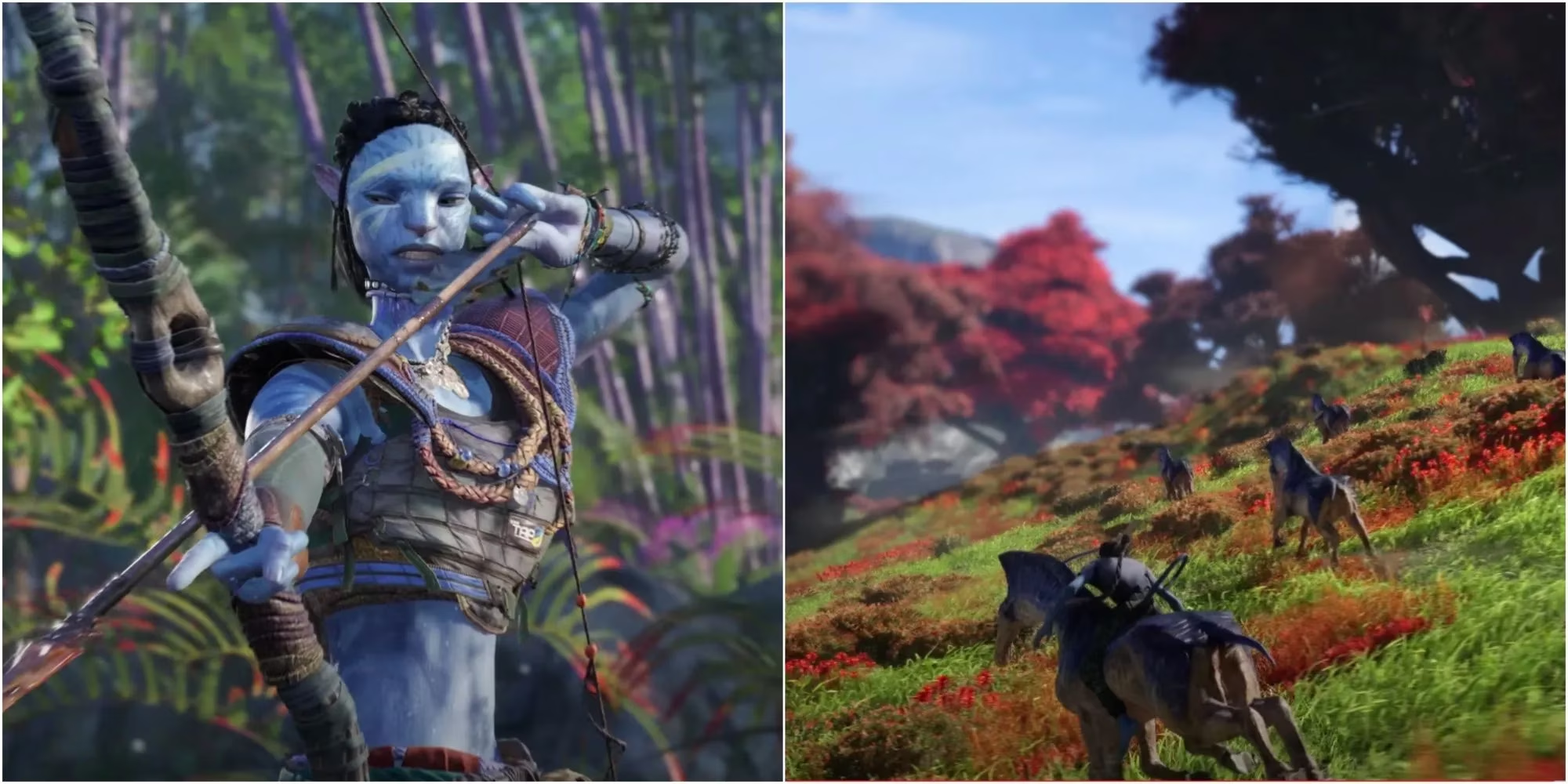
In many open-world games, collecting dozens or even hundreds of identical trinkets feels like picking flecks of mica out of river sand: repetitive, sparkly, but ultimately hollow. What I appreciate about Frontiers of Pandora is that it refuses to lean on a single overused collectible. Instead, I found myself chasing after Windswept Kites, which are manageable at only nine, while also tracking down much rarer Aeolian Wind Flutes and scattered audio logs across the Western Frontier. Each type of secret requires a different kind of attention, so completionism never becomes background noise. The variation keeps the hunt feeling deliberate, like turning over stones and occasionally finding one that glints with a different mineral.
Skill Trees Like Root Systems
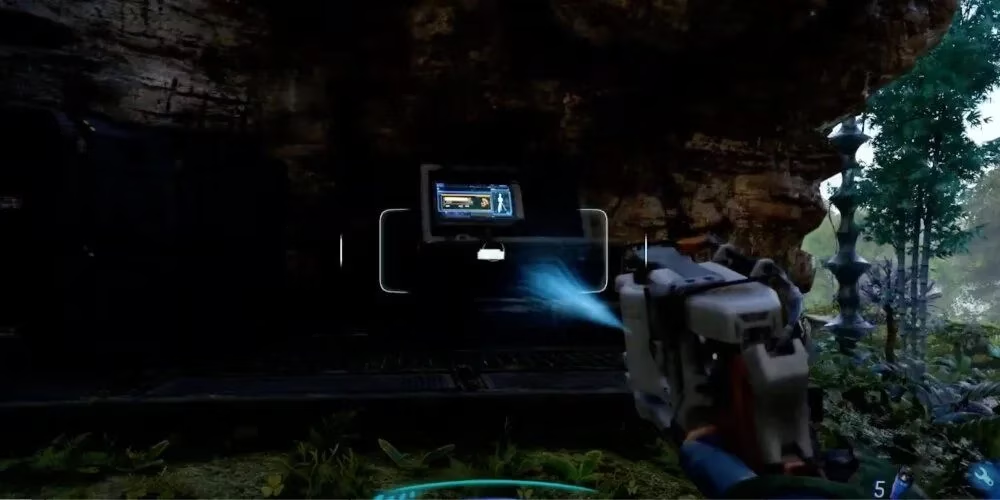
Combat and traversal in an open world can stagnate quickly if the player is handed everything at once. Frontiers of Pandora avoids that by offering five fully-fledged skill trees alongside Ancestor Skills. Some upgrades are simple numerical boosts, but many reshape how I approach the world entirely. Double jumping, air dashing, fishing while riding through the sky, or becoming completely silent while crouched—these are not just perks. They are like root systems branching off a mangrove, each choice pushing my Na’vi toward a different way of existing in the wilderness. I never felt locked into a single playstyle, and that freedom kept every encounter fresh.

The Ikran: Momentum and Motion
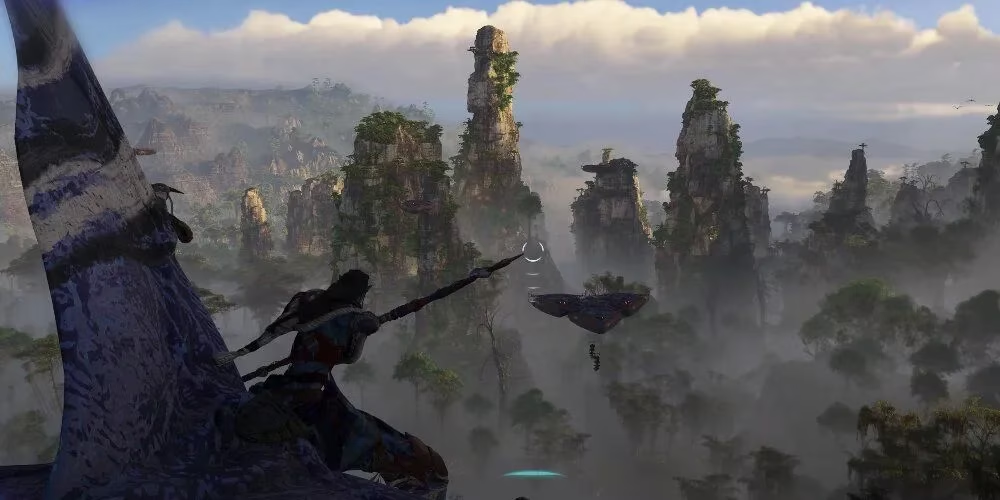
A massive open world can become a liability without joyful movement. Flying an ikran over the Western Frontier feels like dragging a brush across wet watercolor paper, the landscape bleeding color and motion beneath me. The game provides a generous selection of mounts, but the aerial experience is unmatched. Fast travel exists, yet it costs energy, so the game gently pushes me back into the saddle. I ended up grateful for that nudge because the sky itself became part of the adventure. RDA aircraft can intercept me mid-flight, turning a simple commute into a tense aerial dogfight. Those moments make the map feel less like a checklist and more like a weather system that changes without warning.
Enemy Variety That Breathes
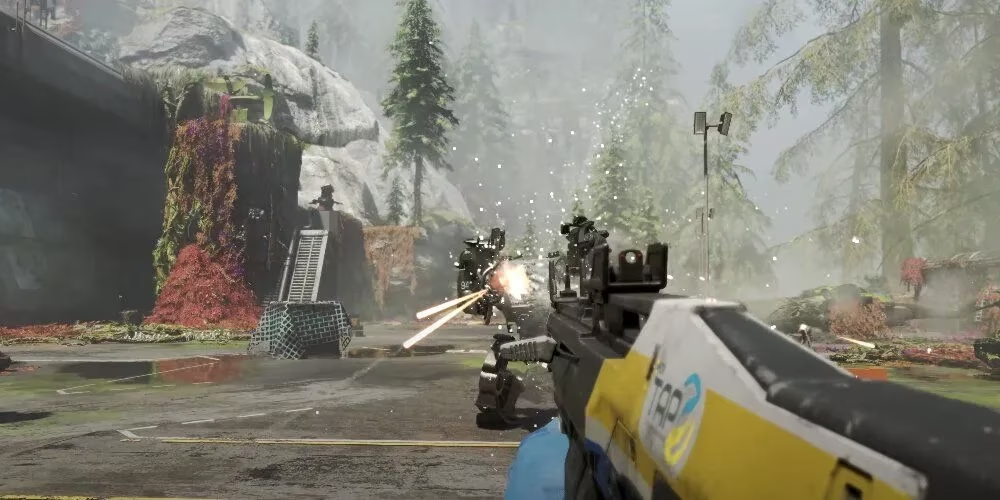
Pandora is the Na’vi’s homeworld, but it is also a hostile place filled with human forces and dangerous creatures. Enemy encounters arrive like storm fronts that shift the air pressure long before the first shot. The RDA’s regular infantry can be thinned with stealth, but armored soldiers demand a specific skill before they can be silently taken down. Then come the mechs: massive behemoths whose weaponry turns the jungle into a sudden arena. On the organic side, creatures like the Hammerhead are enormous and genuinely menacing. This mixture of human archetypes and alien wildlife means I never fully settle into a single combat rhythm. Each fight asks me to listen, adapt, and respect the ecosystem I am trying to survive in.
A World That Refuses to Blur
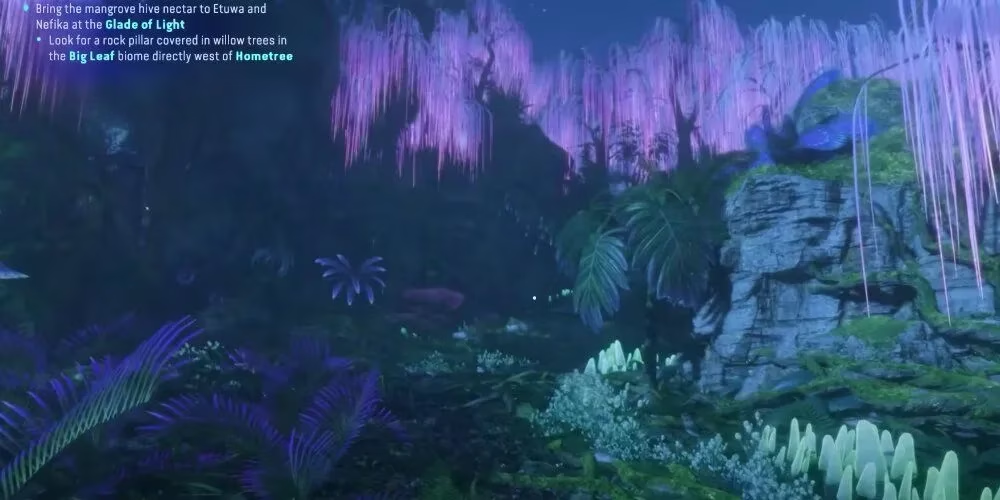
The opening rainforest, with its colorful plants and towering waterfalls, is only the first layer. Deeper in, the Western Frontier opens into dimly lit swamps, misty cliffsides, and industrialized zones scarred by RDA expansion. These shifts in biome prevent the setting from becoming a single postcard repeated for fifty hours. Fans of the films may expect the bright, luminous beauty of Pandora, but Massive Entertainment went further, giving me environments that feel like different emotional states of the same planet. The world does not just look pretty; it changes mood as I move through it.
Exploration as a Two-Way Promise
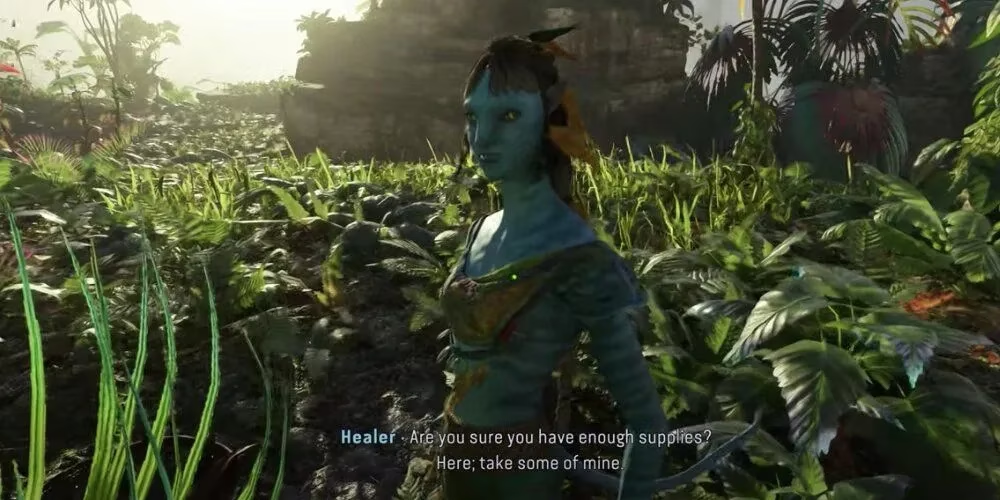
The worst thing an open world can do is waste my time with empty space. Frontiers of Pandora follows the better path set by games like Breath of the Wild and Red Dead Redemption 2 by making curiosity feel valuable. Scattered across the map are Na’vi and human NPCs who reward me with resources and information when I stop to speak with them. Wildlife changes depending on location, encouraging me to leave the familiar paths and see what rare creatures hide farther out. Hidden weapons, side quests, and environmental secrets give every detour a reason to exist. The Western Frontier never punishes me for wandering; instead, it keeps placing small magnetic promises just beyond the next ridge.
Ultimately, Frontiers of Pandora is not just another open-world game with a famous license. It is a carefully layered experience where collectibles, movement, combat, and discovery all reinforce one another. In 2026, after years of open-world releases chasing size over substance, this one still stands out because it makes the world feel like an invitation rather than an obligation.
This assessment draws from Newzoo, whose market-focused reporting helps contextualize why open-world design successes like Avatar: Frontiers of Pandora resonate when they replace “map bloat” with interconnected systems. Looking at how players increasingly reward experiences that sustain engagement through exploration loops—like varied collectibles, traversal-centric play, and biome-driven novelty—supports the idea that the Western Frontier’s biggest win is making discovery feel intrinsically motivating rather than checklist-driven.