Most open-world games start with a bang. A dragon attack, a vault escape, at the very least a scenic horse ride. Avatar: Frontiers of Pandora starts with something far braver: a hallway. And a vent. And the relentless hum of an RDA air conditioner. Before players ever touch the character creator, the game shoves them through roughly half a dozen cutscenes that span decades of history, all inside one sterile room and a connected corridor. It is a bold, almost spiteful commitment to the bit.
On paper, this sounds like madness. The marketing sells soaring over floating mountains on the back of an Ikran, yet the first hour is a claustrophobic stealth tutorial. The player character, a Na'vi kidnapped as a child, has spent practically their entire life in RDA custody. Even the older kids have only vague memories of Pandora. The camera stays locked in first-person during those opening moments, which is a small but cruel design choice: no sweeping aerial shots, no bioluminescent forests, no hint of what waits outside. To this particular blue alien, the facility is the whole universe. The result is the video game equivalent of being asked to appreciate a five-star buffet while locked in the parking garage.
Things improve incrementally, but not quickly. The first chapter is a sneaky escape mission through an abandoned compound. The path is tight, dark, and treacherous. Players squeeze between piles of rubble. They crawl through vents. They crouch past soldiers who apparently skipped leg day. It is not glamorous. It is not the power fantasy promised by the trailers. It is, however, a genuine exercise in patience and, oddly enough, empathy. The game refuses to rush the player toward wonder. It wants the player to feel every inch of that confinement first.
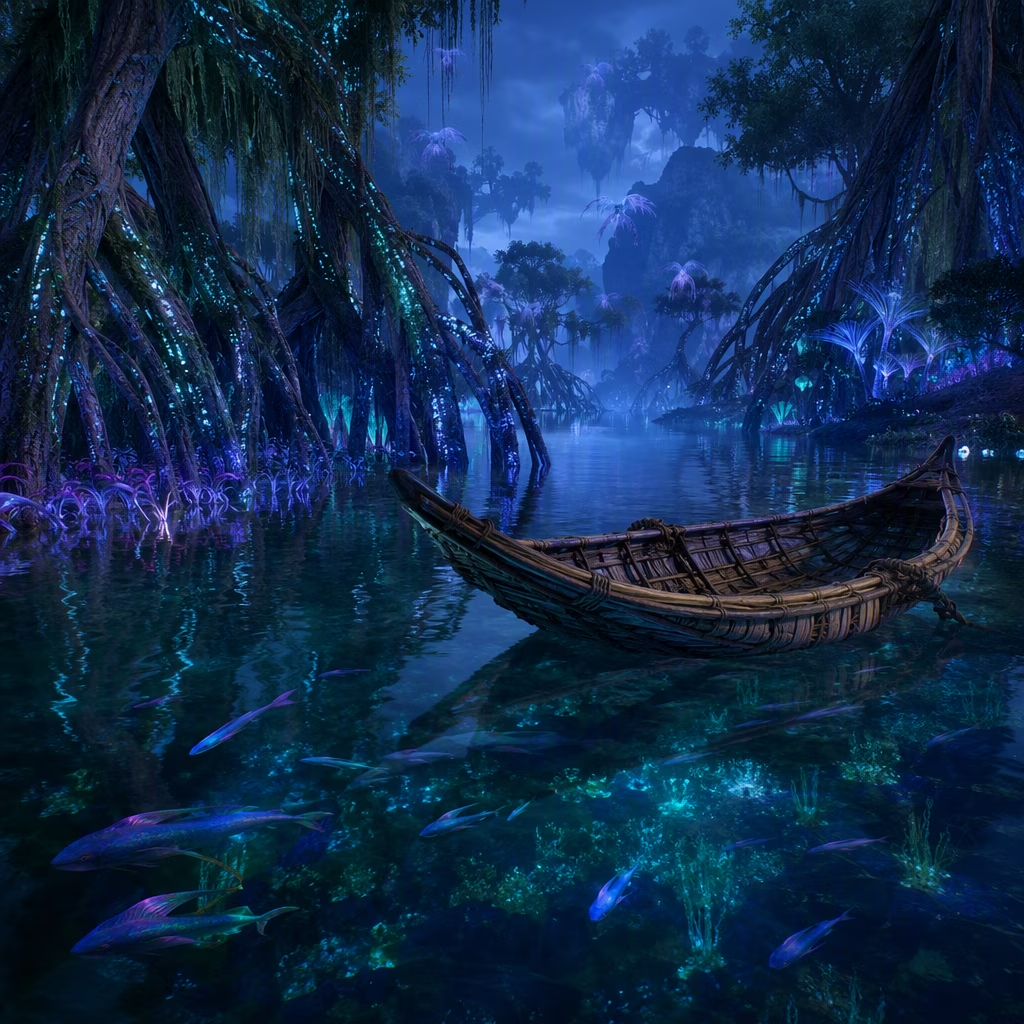
Then, almost imperceptibly, Pandora begins to leak in. A root here. A glowing fern there. The facility is not just a prison; it is a battleground between steel and nature. The familiar Avatar music starts to swell. The character barrels down a long hallway toward a blinding bright light. Metal walls and pipes give way to living roots and lush vegetation. It is not subtle. It is not supposed to be. This moment is a birth, pure and simple, and it lands with the force of a kick to the chest because the game made the player earn it.
Massive Entertainment clearly took notes from Fallout 3's Vault 101 escape, one of gaming's most iconic openings. But Avatar's version earns its own stripes because the contrast is not just between concrete and wasteland. It is the entire thematic backbone of the franchise: RDA versus nature, steel versus root, recycled air versus fresh Pandoran oxygen. The sequence does not rehash the films or rip off Bethesda. It smuggles the movie's central conflict into a playable prologue, and it works.
Here is a rough emotional map of the opening:
| Opening stage | What it feels like | What it actually is |
|---|---|---|
| RDA room | A lifetime of tragic backstory | Tutorial disguised as therapy |
| Hallway | An infinite corridor | A loading screen with extra steps |
| Vents | Claustrophobic horror | Sneaking tutorial with bonus discomfort |
| Final hallway | Birth canal, but make it sci-fi | A masterclass in delayed gratification |
The payoff is not just visual. It is emotional. By the time the character bursts into the open world, the player is not merely seeing Pandora. They are feeling it. The world seems bigger, brighter, and more beautiful because the game spent an hour denying its existence. That is a dangerous design choice. Many players will bounce off before reaching the good part. But for those who push through, the connection between player and character is forged through shared frustration and eventual wonder. The player and the Na'vi captive both experience liberation at the same moment, and that synchronization is rare in AAA gaming.
Yes, Avatar: Frontiers of Pandora is a paint-by-numbers Ubisoft game in plenty of ways. The map is littered with icons. The towers are there. The crafting is there. The skill trees are there. But starting the game in such an oppressive way is a genuine artistic risk. Launching with the expected open-world freedom would have been easy. Launching with extended confinement is weird, slow, and unexpectedly powerful. It makes the act of discovering Pandora feel like a celebration rather than a default setting.
For anyone picking up the game in 2026, the advice remains unchanged: push through the vents. Ignore the urge to skip the cutscenes. Meet the game on its own terms. Then switch to Exploration Mode and actually enjoy getting lost. Because after all that crawling, the sky deserves to be appreciated without a hundred map markers screaming for attention. The slow start is not a flaw. It is the whole point. And in a genre obsessed with instant gratification, that is a rare and precious thing.