Open-world video games frequently bury players under repetitive tasks. Loot is often reduced to a button press, and inventory screens fill up with objects that have little purpose beyond their resale value. Avatar: Frontiers of Pandora takes a different route. Since its release, the game has drawn attention for transforming resource gathering into an actual gameplay moment rather than a mindless errand. Three years later, that design choice still offers a useful case study for how open-world titles can respect a player's time and curiosity.

A Mini-Game That Asks for Precision
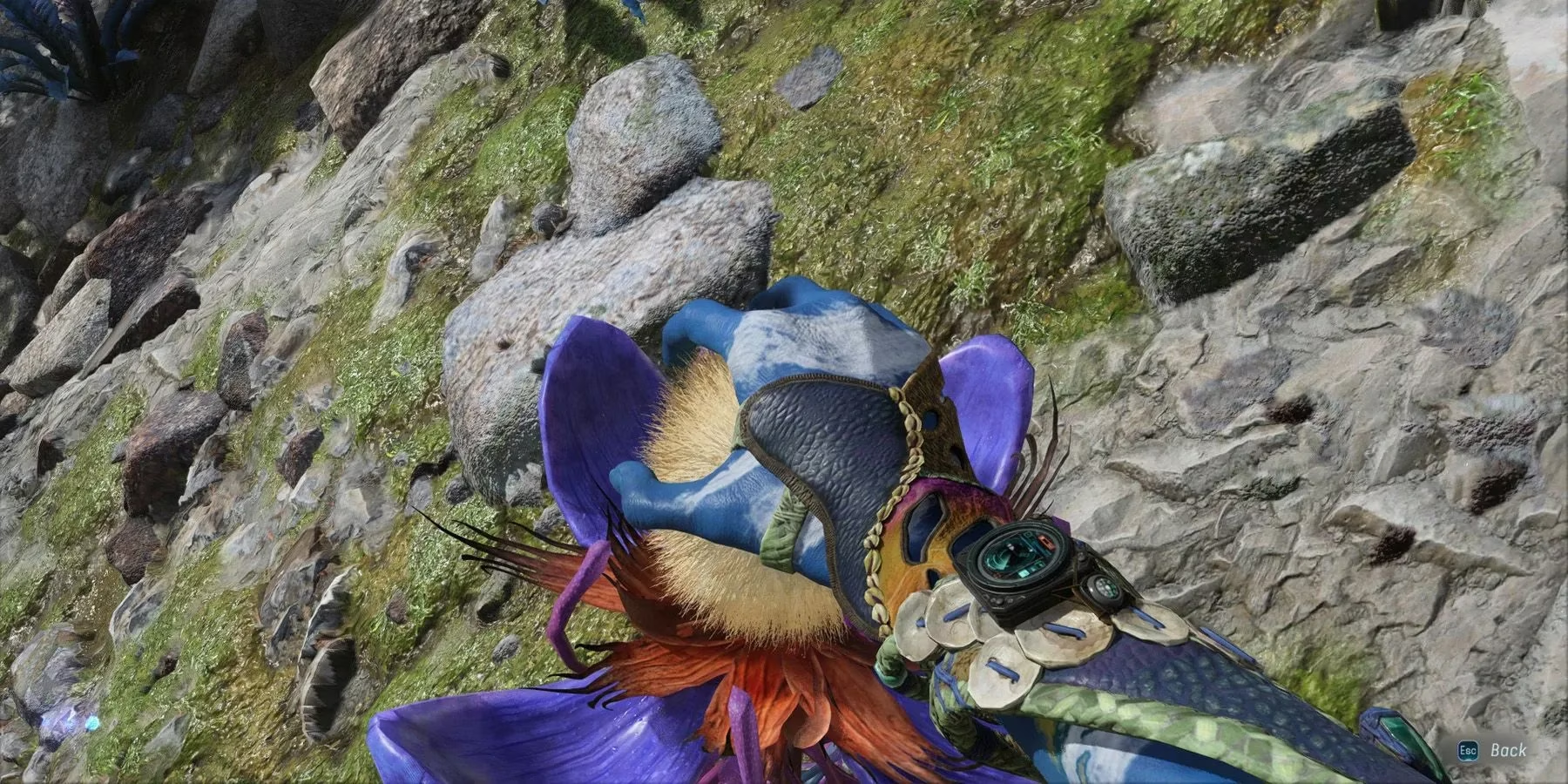
It is easy to compare Avatar: Frontiers of Pandora to Ubisoft's Far Cry series. The same open-world DNA is visible in its bases, collectibles, and map markers. But when it comes to harvesting plants, the game breaks away from the familiar formula. Gathering does not simply happen by spamming a button while walking up to a resource. Instead, the player must pay attention to a mini-game that emphasizes the actual act of collection.
Plucking nature's bounty is most effective when it is done at the right angle, and different plants have different ideas of what exactly that angle should be. The game initially shows a visible indicator to teach the correct direction for detaching fruits, stalks, roots, and other materials. On default settings, however, that helping hand soon disappears. Players are expected to learn the patterns themselves.
Sensory Feedback and Environmental Conditions
Optimal harvesting in Avatar: Frontiers of Pandora works through sensory feedback. Resistance kicks in whenever something is pulled in the wrong direction, while finding the sweet spot results in smooth sailing. The challenge is fundamentally simple, much like a lockpicking mini-game, but it forces players to stop and consider the action for a moment. On a controller, rumble helps indicate resistance. Mouse and keyboard players rely on visual and audio cues, which can make the same impression with slightly less impact.
The mini-game is not the only factor that determines resource quality. Some resources are best gathered while it is raining, while superior options for others can be found in specific environments that are harder to locate or access. Average quality materials are perfectly sufficient in the early game, but later challenges reward players who put extra work into hunting and gathering.
Gathering Actually Matters
One of the biggest reasons this system feels fresh is that gathered items have real value. Many open-world titles, including past Far Cry and Assassin's Creed games, fill inventories with loot that has no actual use beyond monetary exchange. Filling up a bag and running to a trader quickly becomes a tiring chore.
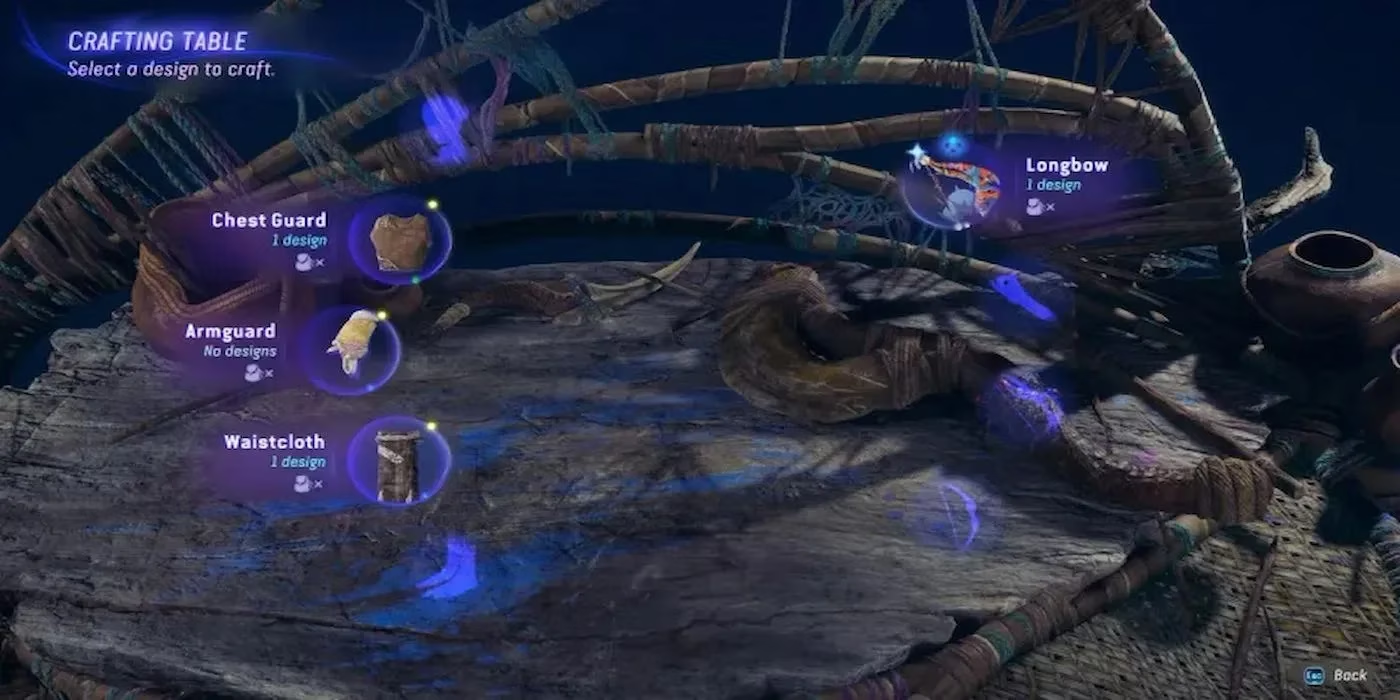
Avatar: Frontiers of Pandora removes that problem by removing the monetary economy entirely. Instead of buying and selling, the game focuses on trading and favors. If clans need specific resources, players can contribute them to a community basket and earn favor. That favor can then be used to effectively acquire items from the Na'vi. Gathered resources are also used to cook recipes and craft weapons and equipment.
| Aspect | Typical Open-World Loot | Frontiers of Pandora Gathering |
|---|---|---|
| Core interaction | Button press or prompt | Direction-based mini-game |
| Resource value | Often only monetary | Used for trading, cooking, crafting |
| Economy | Money and vendors | Community favor and barter |
| Player attention | Minimal | Requires observation and memory |
| Long-term feel | Repetitive clutter | Purposeful collection |
🌿 Every harvest can be put to a reasonably effective use. The Hunter's Guide also offers a rich index of information about discovered life, operating similarly to the codexes found in Assassin's Creed titles. This gives players a reason to study Pandora rather than simply strip it bare.
Can Players Skip the Extra Effort?
The gathering mini-game can still be turned off if it feels too time-consuming. Limited inventory space also encourages players to gather judiciously rather than hoarding everything in sight. Because individual plants within the same species follow the same gathering pattern, frequently harvested flora become memorable. There is a quiet satisfaction in knowing that yanking a particular fruit to the left will be the most efficient move. Some plants lob projectiles or shock interlopers, so learning how to harvest safely can occasionally be more complicated than mastering the mini-game itself.
A Lesson for Open-World Design in 2026
Why does a harvesting mini-game still matter in 2026? Because many open-world games continue to rely on fetch quests, glowing pickups, and inventory bloat. Could more studios learn from Pandora's example? The answer is surprisingly simple: make collection feel connected to the world, and players will treat it as part of the adventure rather than a barrier to progress.
Avatar: Frontiers of Pandora is not a perfect update of the Ubisoft formula. Some other mini-games and tasks can feel tiresome by the end of the experience. Yet when it comes to resources, the game makes smart decisions that improve the overall loop by a significant margin. Gathering might feel like a mindless chore in many open-world titles, but on Pandora, it becomes a reason to slow down, observe, and engage with a living alien world.