When Star Wars Jedi: Survivor launched, it was a game-changer, no pun intended. Respawn Entertainment didn't just iterate on the foundation laid by Fallen Order; they completely overhauled it, especially when it came to traversal and platforming. From the get-go, players felt the difference. Starting on Coruscant with a full suite of abilities that took an entire previous game to unlock? That was a power move. It instantly addressed one of Fallen Order's biggest critiques: the slow, sometimes janky, progression of mobility. Survivor said, "Forget the tutorial, let's get to the good stuff." This set a new standard, but it also created a fascinating puzzle for the inevitable third installment. How do you top a game that already started at the finish line?
The Evolution from Foundation to Masterpiece
Looking back, Star Wars Jedi: Fallen Order was the necessary blueprint. Its platforming was, let's be honest, a bit basic and occasionally floaty. Cal Kestis's moveset felt limited outside of scripted cinematic moments. Wall-running was cool, but it was just the beginning. The game operated on a principle of delayed gratification, doling out new traversal abilities like precious secrets until the very end. This made sense for establishing a hero's journey, but it could feel restrictive. Fast forward to Survivor, and Respawn flipped the script. They took that foundational framework and built a veritable playground on top of it.
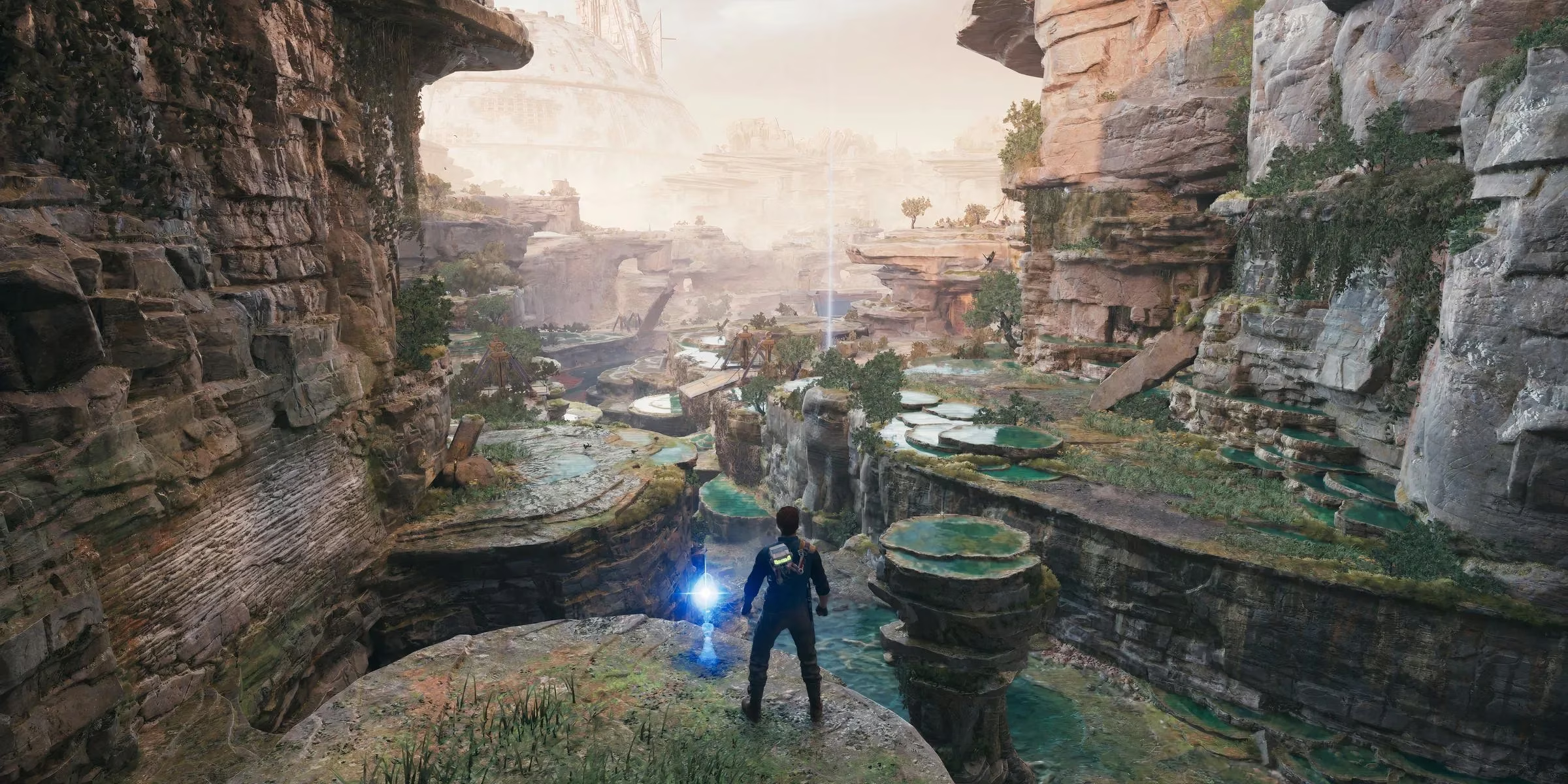
Survivor' opening hours were a masterclass in sequel design. By giving players all of Cal's hard-earned skills from the first game right off the bat, the studio fostered immediate satisfaction and a sense of true progression. New tools weren't about catching up; they were about ascending to new heights. This approach eliminated any feeling of stagnation and allowed the game to introduce more elaborate mechanics organically. The platforming wasn't just a means to an end anymore; it became a core, dynamic pillar of the gameplay loop.
Survivor's Platforming Toolbox: A Tough Act to Follow
Star Wars Jedi: Survivor didn't just improve platforming; it reinvented it with a suite of tools that felt uniquely Star Wars and incredibly fun. Trying to list them all is like recounting your favorite moments from a great film—there are almost too many highlights. Let's break down the key gadgets and abilities that raised the bar:
-
The Ascension Cable/Grapple Hook: This wasn't your average rope. It added verticality and speed, transforming environments into intricate climbing puzzles.
-
Dash Warp through Green Energy Shields: A brilliant way to integrate Force powers into traversal, making environmental puzzles feel mystical and powerful.
-
Merrin's Portals: Partnering with the Nightsister allowed for mind-bending, instantaneous travel through space, creating some of the most memorable puzzle sequences.
-
Zipline Navigation: Sliding along cables was one thing, but the ability to switch directions mid-zipline added a layer of skillful control.
-
The Balloon Mechanic: Arguably the most creative addition. Tossing a floaty orange balloon into the air, grappling to it, and using slow-time to aim your fling to the next point was pure, unadulterated video game joy. It was puzzle-solving, timing, and spectacle all in one.
This arsenal created a platforming experience that was rich, challenging, and deeply integrated into the world. However, its very success presents a major conundrum for the next game. The studio is in a classic "rock and a hard place" situation. Simplifying back to Fallen Order's level would be a massive, disappointing backstep. Players have tasted the good stuff. But expanding the toolset further risks bloat—turning the elegant action-adventure into a cluttered traversal simulator. Where do you go from the top?
The Platforming Paradox and the Road Ahead
One of the most interesting tensions in Survivor was the role of platforming. A significant portion of its most intricate challenges were tucked away in optional Force Tears. These were fantastic for hardcore players seeking a test, but it created a subtle dichotomy. Did this make platforming feel like a side activity rather than a baked-in, essential part of the journey? For the third game, this is a crucial balance to strike.
The franchise's identity is a blend of Soulslike combat and adventure-platforming, but let's keep it real—the tough-as-nails lightsaber duels tend to steal the spotlight. Platforming, while profoundly improved, isn't always the headline act. The next game needs to be savvy about this. It can't force platforming to be the main event if that's not where the heart of the fanbase lies, but it also can't let such a polished and fun system become an afterthought.
So, what's the play for 2026 and beyond? Respawn's ingenuity will be put to the test. They might need to think outside the box. Perhaps the solution isn't more tools, but smarter, more interactive environments that make the existing tools shine in new ways. Or maybe deeper integration with narrative and companion characters, like Merrin's portals, could make traversal feel less like a puzzle and more like an epic story beat. The key will be innovation that feels organic, not just additive.
The journey from Fallen Order to Survivor showed us that Respawn listens and isn't afraid of a major glow-up. The platforming evolution was a testament to that. Now, the gaming world watches with bated breath to see how they'll tackle this high-wire act for the trilogy's conclusion. One thing's for sure: it won't be a simple rehash. The Force will need to be with them to stick the landing. 😉