As I stand here in 2026, reflecting on the landscape of survival horror, one title continues to cast a long, unsettling shadow from its release late last year: Slitterhead. Developed by Bokeh Game Studio under the visionary Keiichiro Toyama, this game didn't just arrive; it slithered into the genre, filling a void left by the industry's turbulent shifts. I remember the palpable shock when Microsoft shuttered Tango Gameworks in 2024, a move that seemed to sever the lifeline for a potential Ghostwire: Tokyo sequel. That loss felt like a phantom limb for fans of its unique paranormal Tokyo. Yet, from that silence emerged Slitterhead, a title that now feels less like a mere successor and more like a haunting echo given flesh—a spiritual heir that has not only filled the space but reshaped it with its own grotesque and surreal brand of terror.
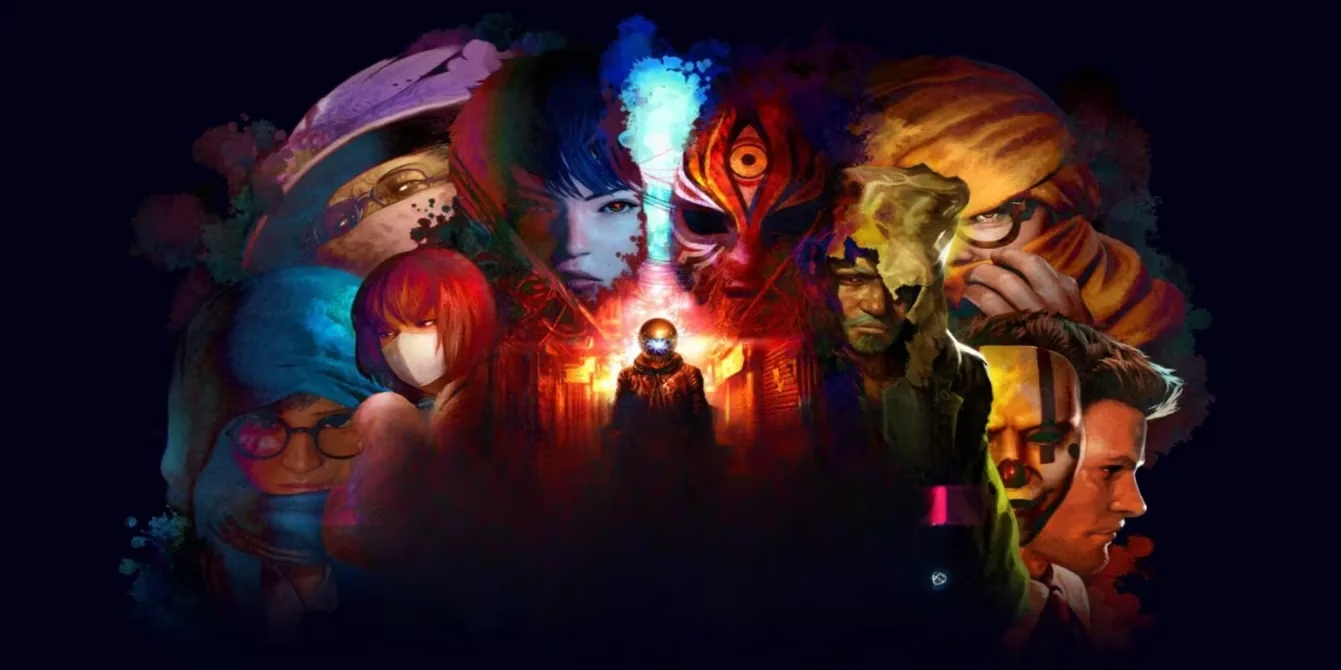
👻 A Tale of Two Tokyos: Shared DNA and Supernatural Roots
Playing Slitterhead is an experience that constantly whispers of its spiritual predecessor. Both games are anchored in a version of Tokyo besieged by the supernatural, a cityscape transformed into a playground of psychological and physical horror. Ghostwire: Tokyo masterfully wove traditional Japanese folklore and modern urban legends into its fabric, populating eerily empty streets with "Visitors"—demons, specters, and mythological figures. Slitterhead picks up this cursed thread but spins it into a darker, more surreal tapestry. Its monstrosities feel like they've crawled from a Lovecraftian nightmare, their forms less defined by folklore and more by a pervasive, cosmic dread. The city itself is a character in both games: oppressive, labyrinthine, and dripping with an atmosphere so thick you could choke on it. Where Ghostwire felt like a ghost story whispered in a neon-lit alley, Slitterhead is that same story screamed from a distorted, flesh-warped mouth.
| Aspect | Ghostwire: Tokyo (2022) | Slitterhead (2025) |
|---|---|---|
| Perspective | First-Person Shooter (with magic) | Third-Person Survival Horror Action |
| Core Mechanic | Elemental weaving & spirit purification | Body-hopping possession & visceral combat |
| Inspiration | Japanese Folklore & Urban Legends | Surreal Body Horror & Cosmic Terror |
| World Style | Open-world Shibuya | Dense, interconnected districts |
| Studio Legacy | Tango Gameworks (The Evil Within) | Bokeh Game Studio (founded by Silent Hill's Toyama) |
🎮 Mechanics of Mayhem: From Spectral Weaving to Body-Hopping
The core gameplay loops, while distinct, share a foundational philosophy of empowerment against overwhelming odds. Ghostwire gave us Akito and KK, combining physical and psychic powers in a rhythmic dance of elemental spells. It was a supernatural FPS where your fingers became conduits for wind, water, and fire. Slitterhead, in its genius, pivots to a third-person perspective and introduces a possession mechanic that is as terrifying as it is ingenious. The ability to "slither" into the bodies of both enemies and civilians is not just a tool for combat or puzzle-solving; it's a narrative device that blurs the lines between hunter and prey, self and other. This mechanic turns the city into a gruesome ecosystem where every creature is a potential vessel. Combat is raw and visceral—a stark contrast to Ghostwire's more elegant spectral weaving. It’s the difference between conducting a symphony of elements and performing a desperate, bloody surgery on reality itself.
🧠 The Toyama Touch: A Legacy of Psychological Depth
Understanding Slitterhead requires looking at the pedigree of its creator. Keiichiro Toyama, the mind behind the original Silent Hill and the dreamlike Gravity Rush, has always excelled at marrying gameplay with profound psychological unease. With Bokeh Game Studio's debut title, he has distilled his signature themes. The surreal story, the focus on transformation and identity (literally, through possession), and the oppressive atmosphere are all hallmarks of his work. In many ways, Slitterhead feels like the mature, unfiltered evolution of the concepts he pioneered in Silent Hill. It doesn't just scare you with monsters; it unsettles you by making you complicit in the monstrosity. The game's horrors are not just external invaders but internal corruptions, spreading through the city like a sentient virus or a memory that physically rewires its host.
🕯️ The Torch is Passed: Filling the Void in a Volatile Industry
The closure of Tango Gameworks was a sobering moment, a stark reminder of the instability lurking beneath the glossy surface of game development. It left a specific, Ghostwire-shaped hole in the hearts of fans. Slitterhead, in 2026, doesn't feel like a replacement but a resurrection. It has absorbed the essence of what made Ghostwire special—its setting, its commitment to a unique cultural horror, its atmosphere—and metabolized it into something new and fiercely original. For those of us who longed to wander another haunted Tokyo, Slitterhead is that wish granted in a way we never could have imagined. It is the answer to a question the industry almost made unaskable. The game stands as a testament to the resilience of creative vision, proving that even when studios fall, the ideas they champion can find new life elsewhere, often in more daring and disturbing forms.
🏙️ Final Thoughts: A New Pillar of Horror
Playing Slitterhead today is to experience a game that is both a poignant callback and a bold step forward. It is:
-
A love letter to the atmospheric, location-based horror of titles like Ghostwire: Tokyo and Resident Evil.
-
A showcase for Toyama's unparalleled ability to craft surreal, psychologically complex worlds.
-
A beacon that highlights how spiritual successors can sometimes surpass their inspiration, especially when born from necessity and passion.
The game is a complex organism, its narrative tendrils wrapped around themes of identity, corruption, and survival. It has successfully carved out its own terrifying niche, ensuring that the flame of innovative, culturally-rich horror that Ghostwire: Tokyo lit continues to burn brightly, albeit with a more grotesque and mesmerizing hue. In the end, Slitterhead is more than a game; it's a statement—a proof that in the ecosystem of horror gaming, when one predator falls, another, perhaps even more terrifying, evolves to take its place.