Look, I have a confession: I am a sucker for a good open-world checklist. There is something deeply soothing about climbing a tower, revealing a map, and then methodically deleting every red icon like I am doing cosmic spring cleaning. But even I have to admit that Ubisoft's open-world formula has been beaten into a fine paste. Far Cry 3 back in 2012 was lightning in a bottle: clear enemy camps, gather plants, craft a bigger wallet, repeat until your brain hums. It was fresh, it was addictive, and it made every other publisher green with envy. Fast-forward to 2026, and that same loop has been reheated so many times that it tastes like leftover casserole. Ubisoft has slapped it onto Assassin's Creed, Ghost Recon, Watch Dogs, and a dozen other titles. Sometimes it works. Sometimes it is a total slog. And then there is Avatar: Frontiers of Pandora, a game that somehow makes the formula feel almost new again. Meanwhile, Star Wars Outlaws is the exact game that should have run screaming in the opposite direction.
The Ubisoft Formula: A Blessing and a Curse
Let us define the beast. The Ubisoft open-world formula usually involves: a sprawling map, a bunch of enemy outposts, resource nodes, crafting recipes, side quests that multiply like rabbits, and a progression system that says 'go here, do the thing, unlock more map.' It is not inherently bad. Far Cry 3 used it to create a power fantasy about surviving a dangerous island and becoming a predator. The problem is that Ubisoft later treated it like a universal screwdriver. Need a game about ancient assassins? Open-world formula. Need a game about military shooty guys? Open-world formula. Need a game about talking to your car? Open-world formula. By 2026, players are tired. We have seen the same skeleton dressed in different skins, and we can spot the copy-paste seams from orbit.
Why Avatar: Frontiers of Pandora Actually Pulls It Off
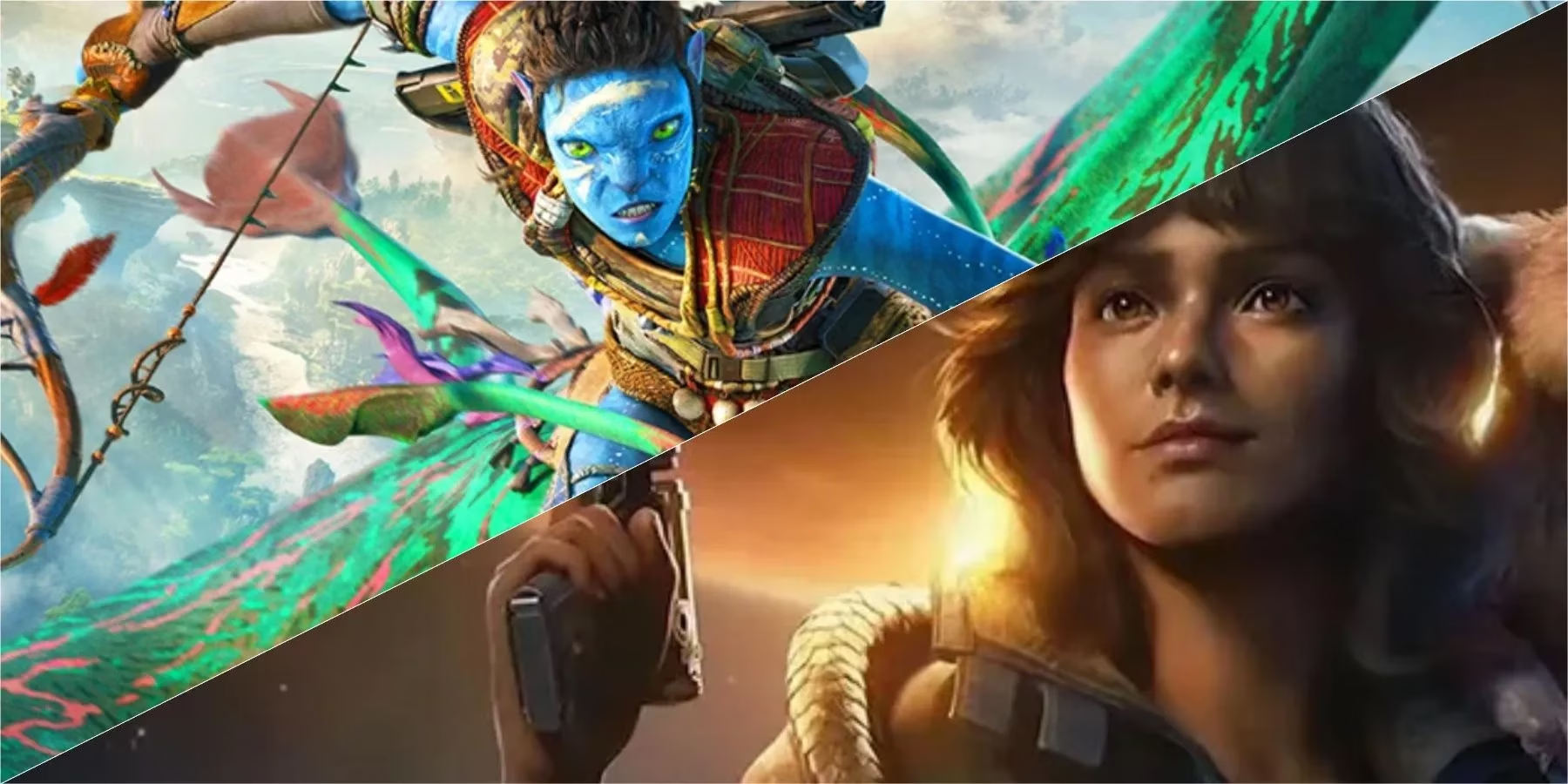
Here is the spicy take: Avatar: Frontiers of Pandora is one of the few Ubisoft-style open worlds where the formula actually makes sense. The Na'vi are hunters. They gather plants, bond with animals, craft gear, and live in harmony with their environment. The RDA are a polluting, resource-hungry military force that builds bases everywhere. So when the game asks you to take down RDA outposts, gather materials, and craft better equipment, it is not just ticking boxes. It is literally the plot of the Avatar universe. James Cameron's first movie had Jake Sully learning to hunt, ride a banshee, and earn his place among the Omatikaya. The game turns that into a loop. You are not clearing camps because the map says so; you are clearing camps because the planet is dying and you are the angriest blue cat-person with a bow. The hunting and crafting mechanics feel right because Na'vi culture revolves around them. Even the map liberation is thematically sound: every RDA facility you destroy is a small step toward healing Pandora. It is still a Ubisoft game, with all the familiar bells and whistles, but the bells are made of wood and the whistles sound like ikran calls. It fits.
Why Star Wars Outlaws Needs to Run the Other Way
Now, Star Wars Outlaws. The premise is chef's kiss: you play as Kay Vess, a scoundrel trying to make her way in a galaxy full of crime syndicates, Imperial jerks, and questionable cantina food. That premise screams planet-hopping adventure, daring heists, double-crosses, and space combat. It does not scream 'clear 47 Imperial camps and pick 200 glowing plants.' Yet that is exactly the trap the Ubisoft formula sets. If Outlaws leans too hard on the standard open-world checklist, it risks turning a scoundrel fantasy into a part-time job. Smuggling should feel dangerous and lucrative. It should not be a side fetch quest that you forget about the moment you open the map. Imperial bases? Sure, a scoundrel might infiltrate one. But the whole game should not revolve around outpost liberation, hunting, and crafting. Star Wars is about scale, weird aliens, political intrigue, and the thrill of jumping to hyperspace with a cargo hold full of trouble. It is not about collecting 12 space flowers to craft a slightly better blaster scope. In 2024, when Outlaws launched, it had some genuinely good ideas: reputation with syndicates, a cool ship, and a likable lead. But the open-world bloat held it back from being the scoundrel epic it could have been. By 2026, with the dust settled, it is clear that the game should have zigged where Ubisoft usually zags.
What Outlaws Should Steal Instead
If I were in charge, I would tell the developers to lock the Ubisoft checklist in a carbonite chamber. Instead, lean into what makes Star Wars special. Give me handcrafted heists that play out like mini-movies. Give me a reputation system where crossing the Pykes actually changes how the galaxy treats me. Make the ship feel like a character, not a fast-travel menu. Let me bribe, bluff, and blast my way through problems. And for the love of the Force, do not make me climb another tower to reveal the map. I can buy a map. I am a scoundrel. I know a guy.
The Bottom Line
The Ubisoft open-world formula is not the devil. It can work beautifully when the setting and story justify it. Avatar: Frontiers of Pandora proves that. The Na'vi hunt, gather, craft, and fight to protect their home, so the mechanics click into place like a well-oiled ikran saddle. Star Wars Outlaws, on the other hand, needs to be its own beast. It should be a wild, unpredictable, slightly illegal ride through the galaxy, not a checklist simulator with a blaster skin. In 2026, we have enough open-world games to fill a Death Star. What we need are games with personality, not another map full of icons. So here is my plea: let scoundrels be scoundrels. Let Pandora be Pandora. And please, Ubisoft, put down the tower. We can see the whole map already. We are not mad. We are just tired.