The first breath of Pandora is not really a breath at all. It is a blinding wash of light, a rush of alien color, and the sudden, dizzying realization that the world is far larger than the gray walls that once contained it. In Avatar: Frontiers of Pandora, that realization arrives through one of gaming's most beloved traditions: the stepping-out moment. The player-character, a young Na'vi kidnapped as an infant and raised inside an RDA facility, has never seen the outside world. When escape finally comes, the game does not simply open a door. It stages a threshold, a promise, and a quiet emotional release all at once. 🤯
What makes a stepping-out moment unforgettable? It is not merely the size of the map or the beauty of the skybox. It is the way a game compresses hours of confinement into a single, liberating image. Bethesda has long been associated with this design language, even if it did not invent it. In Fallout 3, players spend their early hours beneath the earth in Vault 101 before the vault door rolls aside and a ruined wasteland burns white with sunlight. In Skyrim, the escape from Helgen ends at a cave mouth, where the snowy expanse of the province waits in silence. Both sequences work because they trust the player to feel the shift from corridor to horizon. They do not over-explain freedom. They let it shimmer.
Avatar: Frontiers of Pandora follows that lineage with remarkable confidence. The opening sequence traps the player inside an RDA facility, and the visual repetition is deliberate. Drab gray walls. Rooms full of consoles. Metal walkways that offer no sky. The game keeps the player close to the same oppressive sights until the environment itself begins to leak. First, a single plant appears on a railing. Then grass pushes through a metal walkway. Finally, just before the surface, a mass of vines reaches into the facility through a broken hole in the ceiling. These are not random details. They are small promises that Pandora is not a myth. It is waiting above. 🌱
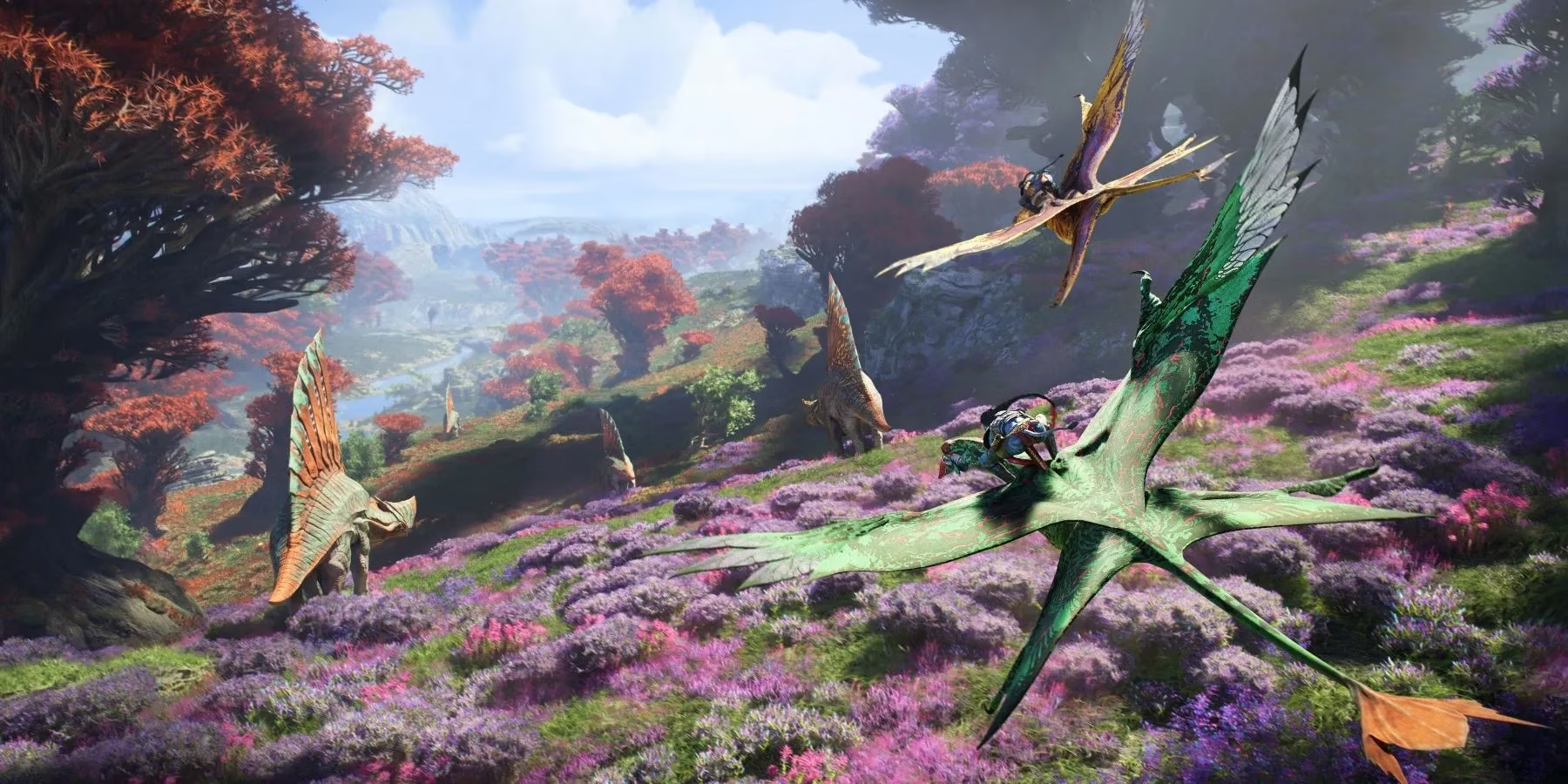
When the player-character finally exits the facility, the game answers every one of those promises. Bright light floods the screen, and then comes the bombardment: breathtaking flora, curious fauna, realistic lighting, and environmental design so detailed that the world feels less like a backdrop and more like a living argument. Pandora is not just pretty. It is central to James Cameron's Avatar universe, where nature is both setting and subject. The first film broke new ground with revolutionary motion capture and cutting-edge CG, bringing the Na'vi to life and creating a world of lush foliage, quirky wildlife, and bioluminescent wonder. Frontiers of Pandora inherits that visual language and turns it into a playable space. 🦋
Isn't that the dream of every open-world game? To make the player feel that the map is not a checklist but a place with weather, memory, and consequence? The stepping-out moment is where that dream is most vulnerable. If the reveal is too small, the world feels like a stage. If it is too loud, the emotion becomes spectacle. Frontiers of Pandora finds a balance by linking the player and the character through the same feeling of freedom and wonder. The Na'vi protagonist has never seen this world; the player has never seen this version of Pandora. For one bright moment, both are outsiders stepping into the same impossible garden.
| Game | Confinement | Threshold | Emotional Effect |
|---|---|---|---|
| Fallout 3 | Vault 101 | Vault door opens to the wasteland | Shock, scale, survival |
| Skyrim | Helgen tutorial | Cave exit to snowy expanse | Choice, adventure, calm |
| Avatar: Frontiers of Pandora | RDA facility | Exit into Pandora's wilds | Wonder, belonging, release |
In 2026, years after launch and alongside a crowded field of open-world releases, this sequence still holds up because it understands something simple: the opposite of confinement is not just space. It is color. It is sound. It is the feeling of grass underfoot and the suspicion that something living is watching from the ferns. The game's post-launch expansions and ongoing presence have only reinforced how well the opening establishes Pandora as a place worth protecting. The RDA facility is gray because it represents extraction and control. The world outside is luminous because it represents connection and fragility. That contrast gives the stepping-out moment a thematic weight that many similar scenes lack. 🌍
So what remains after the light fades and the player takes those first steps? A lesson about design, certainly. A strong opening does not need a long cutscene or a grand speech. It needs a corridor, a crack of green, and a door that finally opens. But there is also a story lesson. Avatar: Frontiers of Pandora begins with a character who has been denied a home and gives them a world to reclaim. The stepping-out moment is not the end of that story. It is the first sentence. And like the best first sentences, it makes the reader, or in this case the player, desperate to know what comes next. 🎮