The anticipation for a sequel to Star Wars Jedi: Survivor is palpable, with the gaming community already speculating intensely about its potential antagonist. Given the iconic status villains hold in the Star Wars universe—from the imposing Darth Vader to the cunning Grand Admiral Thrawn—the choice of a primary foe is not merely a narrative decision but a foundational one for the game's legacy. The previous installments, Fallen Order and Survivor, featured memorable adversaries like Trilla and Bode, setting a high bar for personal and thematic conflict. As discussions turn toward 2026 and beyond, the central question emerges: should the sequel rely on familiar Sith lords, or boldly chart a new course with original threats? The answer may very well define the future of Star Wars gaming.
The Temptation of Familiar Faces
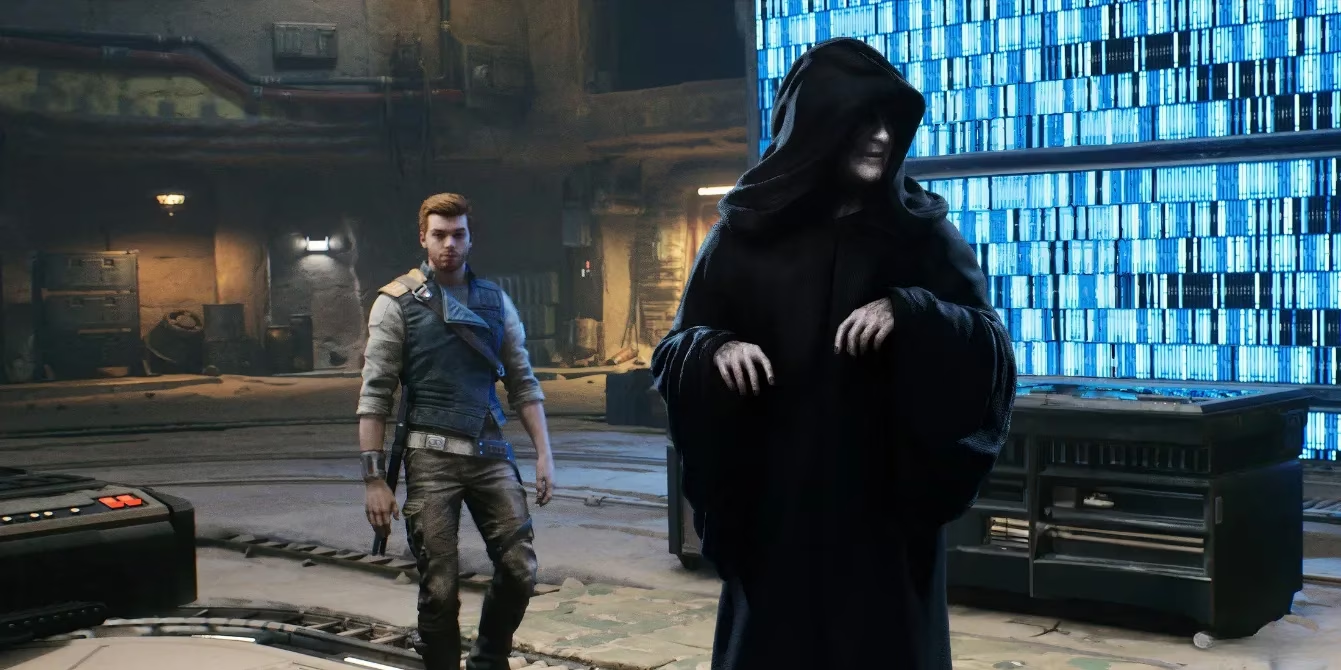
It's undeniable that Emperor Palpatine and Darth Vader are titans of villainy. The story of Jedi: Survivor is set firmly within the Imperial era, making their inclusion a logical, almost expected, choice. Yet, is this the right path for Cal Kestis's continuing journey? Consider the recent history: Darth Vader has already made dramatic appearances in both preceding games, serving as an overwhelming force of nature rather than a personal nemesis. A third confrontation risks feeling repetitive, diminishing the impact of those prior encounters. Similarly, Emperor Palpatine's overuse across Star Wars media—epitomized by the controversial "Somehow, Palpatine returned" line from The Rise of Skywalker—has diluted his mystique. His power, as demonstrated in brief, devastating moments like his duel against Maul and Savage Opress in The Clone Wars, thrives on scarcity and mystery. Would reducing him to a predictable endboss not undermine the very aura that makes him formidable?
The Case for a Personal Antagonist
What makes a villain truly resonate with players? It's often the personal connection, the direct opposition to the protagonist's values and journey. Think of Trilla Suduri, the fallen Jedi turned Inquisitor in Fallen Order, whose tragic path mirrored Cal's own struggles. Or Bode Akuna in Survivor, whose betrayal cut deep because of the trust and camaraderie established. These were not distant, mythical figures but individuals whose conflicts with Cal were intimate and thematically rich. For the sequel, wouldn't a villain crafted specifically for Cal and his crew offer a more compelling narrative? An antagonist who challenges Cal's evolving philosophy, his bonds with Merrin, Greez, and Kata, or his vision for the Hidden Path could create stakes that feel immediate and profound. Palpatine, by contrast, operates on a galactic scale; his confrontation with Cal might lack the personal venom needed for a video game's emotional core.
Expanding the Galaxy's Threats
The Star Wars galaxy is vast, teeming with uncharted regions and unexplored cultures. Yet, much of the recent storytelling has confined itself to a familiar 60-year timeline and revolving door of Sith, Jedi, and Mandalorians. Does this not make the universe feel smaller? A sequel to Jedi: Survivor presents a golden opportunity to break this cycle. Imagine introducing:
-
New Force Traditions: Groups that wield the Force in alien, unforeseen ways, perhaps from the Unknown Regions or wild space.
-
Non-Force Sensitive Foes: Brilliant tacticians, advanced mercenary syndicates, or ancient civilizations with technology that rivals Jedi abilities.
-
Internal Conflicts: Threats from within the fledgling rebellion or the Hidden Path itself, challenging Cal's ideals from a place he least expects.
Such innovations would not only refresh the gameplay but also enrich the lore, making the galaxy feel truly immersive and alive. After all, if the ultimate fate of the Empire is already known from the films and Star Wars Rebels, Cal's personal victories and defeats must derive meaning from the unique battles he fights and the specific enemies he overcomes—or fails to.
Thematic Depth and Narrative Necessity
At its heart, Cal's story is one of resilience in a dark time. He cannot single-handedly topple the Empire, but his struggles can illuminate corners of the galaxy and facets of the Force that the saga has yet to reveal. A villain should embody the central themes of his journey: loss, hope, sacrifice, and the definition of family. A reused Sith Lord might offer spectacle, but would they challenge Cal on these deeper levels? The sequel needs an antagonist who is a dark reflection of Cal's choices, perhaps a former ally twisted by grief, a zealot from a forgotten Force cult, or a Imperial warlord with a personal vendetta. This approach aligns with Star Wars' need to take creative risks again, moving beyond the safety of known factions to explore new narratives that can surprise and engage players.
Conclusion: A Call for Boldness
As we look to 2026 and the future of Star Wars gaming, the sequel to Jedi: Survivor stands at a crossroads. It can follow the well-trodden path of iconic, but overexposed, villains, or it can embrace the vast potential of its setting to introduce a new generation of threats. The latter choice promises a more personal, thematically coherent, and ultimately memorable experience. By crafting a villain born from Cal's own story—one who makes the galaxy feel larger, not smaller—the developers can ensure that Cal Kestis's legacy is not just another tale of the Galactic Civil War, but a unique and essential chapter in the Star Wars mythos. The Force awaits new challenges; it's time to answer the call.