The landscape of Soulslikes has undergone a remarkable transformation since its inception in the early 2010s. What began as a genre often criticized for producing uninspired, overly difficult clones of FromSoftware's formula has blossomed into a diverse field of innovation. Flintlock: The Siege of Dawn, arriving in the mid-2020s, stands as a vibrant testament to this evolution. It moves beyond mere imitation, carving its own identity not through incremental changes to combat, but through a bold, fundamental reimagining of player movement and environmental interaction. The game cleverly integrates a robust, stylish platforming system into the Soulslike framework, a choice that not only distinguishes it in a crowded market but also pushes the boundaries of what the genre can encompass.
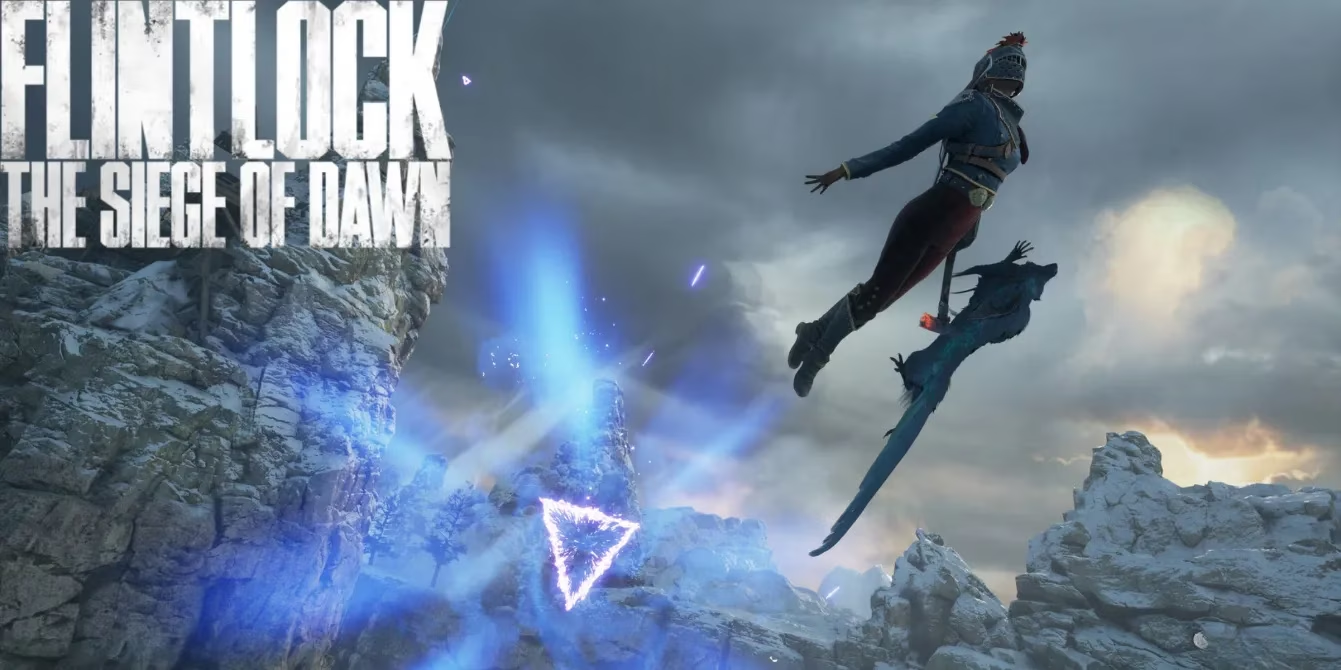
For over a decade, platforming was largely an afterthought in the Soulslike genre. The foundational titles, Demon's Souls and Dark Souls, established a template focused on deliberate combat, intricate level interconnectivity, and methodical exploration—all firmly grounded. Traversal was a matter of walking, running, and the occasional precarious ledge shuffle. The jump function, when it existed, was often awkwardly mapped and rarely essential. This design philosophy heavily influenced the first wave of Soulslikes, which faithfully replicated this earthbound approach. As a result, for years, the genre and complex, fluid platforming mechanics were seen as mutually exclusive concepts.
However, as the genre matured and absorbed influences from adjacent styles like action-adventure, the doors began to creak open. Games like Star Wars Jedi: Survivor demonstrated that Soulslike combat and progression could coexist with more dynamic movement. Yet, even landmark titles like Elden Ring, which finally introduced a dedicated jump button and the Spirit Steed Torrent, treated platforming as a secondary tool—useful for exploration but not core to the identity. This is the precise niche Flintlock: The Siege of Dawn aggressively claims and makes its own. It doesn't just add a jump; it builds its entire traversal identity around acrobatic, explosive mobility.
🔥 The Game-Changer: Enki & The Arsenal of Movement 🔥
From the early hours, Flintlock signals its departure from tradition. The acquisition of the mystical fox companion, Enki, isn't just a narrative beat—it's the key to unlocking a thrilling movement suite. Players immediately gain access to a powerful toolkit:
-
Double Jump: Breaking the vertical limits of traditional exploration.
-
Air Dash: Providing crucial mid-air evasion and horizontal speed.
-
Teleport Strike: A combat-traversal hybrid for closing distances stylishly.
This isn't a mere quality-of-life feature; it's the heartbeat of the experience. The game's levels are designed with this fluidity in mind, featuring vertical cliffs, wide chasms, and hidden pathways that demand mastery of these abilities. Traversal becomes a kinetic, joyful expression rather than a simple means to an end.
🎯 Style as Substance: The Visual Flourish 🎯
Where some early Soulslikes could feel clunky, Flintlock uses its movement to inject pure style. The animations during traversal are among the game's most polished and exhilarating. The protagonist doesn't just dodge; they pirouette through the air, using controlled Black Powder explosions at their feet to propel and redirect momentum. This creates a spectacular visual language where every leap and dash feels impactful and cool. It turns navigation into a performance, a stark and welcome contrast to the often weighty, grounded movement of its predecessors.
💥 Beyond Gimmickry: Integrated Design 💥
The genius of Flintlock's approach lies in integration. The platforming isn't siloed into optional puzzle rooms or rare sequences. It's woven into the fabric of combat, exploration, and even boss encounters. Imagine using an air dash to evade a sweeping attack, followed by a double jump to reach a higher vantage point for a grenade toss, all in one fluid motion. The environment becomes a tactical playground. This design philosophy helps the game overcome some of its rougher edges in other areas, as the sheer fun of movement provides a consistently engaging throughline.
In 2026, the Soulslike genre is more popular and varied than ever. Standing out requires more than just a challenging boss or a bleak world. Flintlock: The Siege of Dawn understands this. By placing dynamic, integral platforming at its core, it doesn't just escape the shadow of 'shameless clone' accusations—it forges a new path. It proves that the Soulslike template is a flexible foundation, capable of supporting exhilarating new forms of play that honor the genre's roots while fearlessly leaping toward its future. For players weary of tread-worn paths, Flintlock offers a thrilling, explosive, and vertically inclined alternative.