Well, butter my biscuit and call me surprised! Is that... could it be... a genuinely positive piece of gaming news on the horizon? I had to check my calendar twice to make sure it wasn't April Fool's Day in 2026. You see, just a few months back, the gaming world was collectively groaning as Microsoft dropped the axe on Tango Gameworks, seemingly sending the brilliant minds behind Hi-Fi Rush and Ghostwire: Tokyo to the great developer farm in the sky. Talk about a major bummer. But hold onto your controllers, folks, because the plot has thickened like day-old gravy. In a move that's more shocking than finding a legendary item on your first try, Korean gaming behemoth Krafton has swooped in like a superhero in a battle royale, saving the studio from oblivion! Cue the confetti... well, maybe just a cautious fist pump.
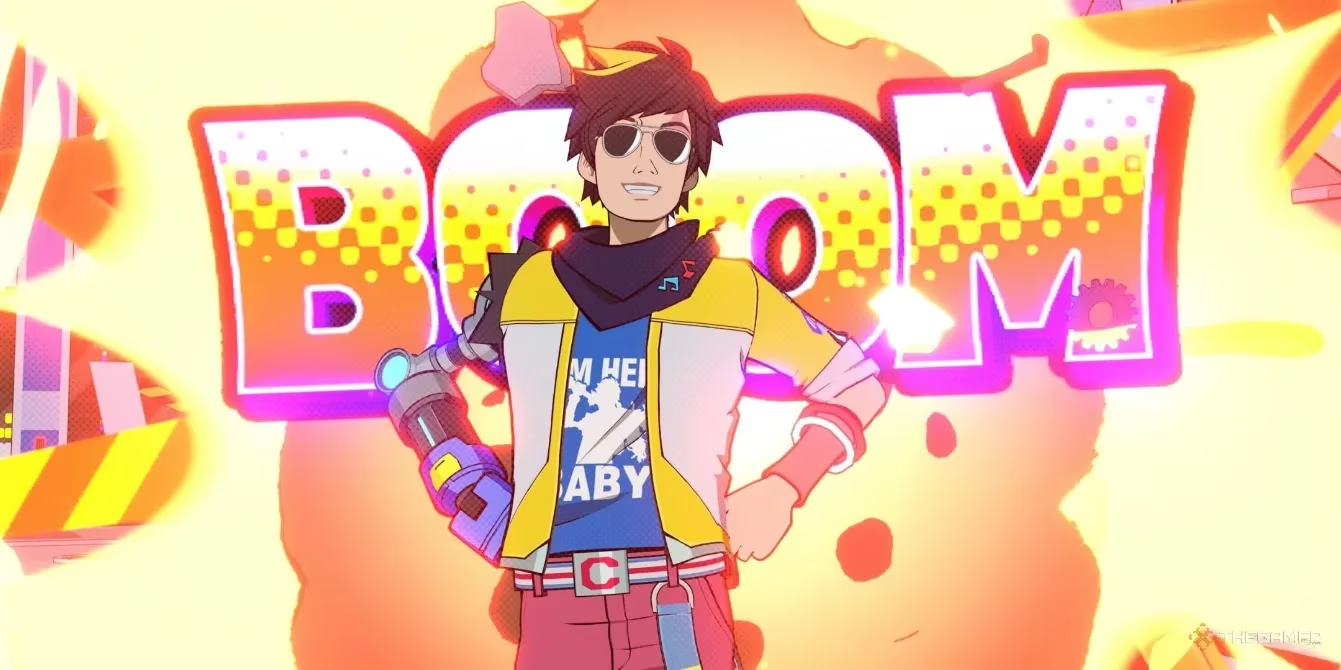
Let's get down to brass tacks. Krafton hasn't just saved the studio; they've reportedly rehired a bunch of the old crew and, most importantly for us players, snagged the rights to Hi-Fi Rush. In a statement that actually sounds human, Krafton emphasized wanting to "ensure a smooth transition and maintain continuity." In the year of our lord 2026, where layoff announcements are more common than loot box pop-ups, this is the equivalent of finding a health potion when you're one hit from death. It's a rare W in an industry that's been taking L's left and right.
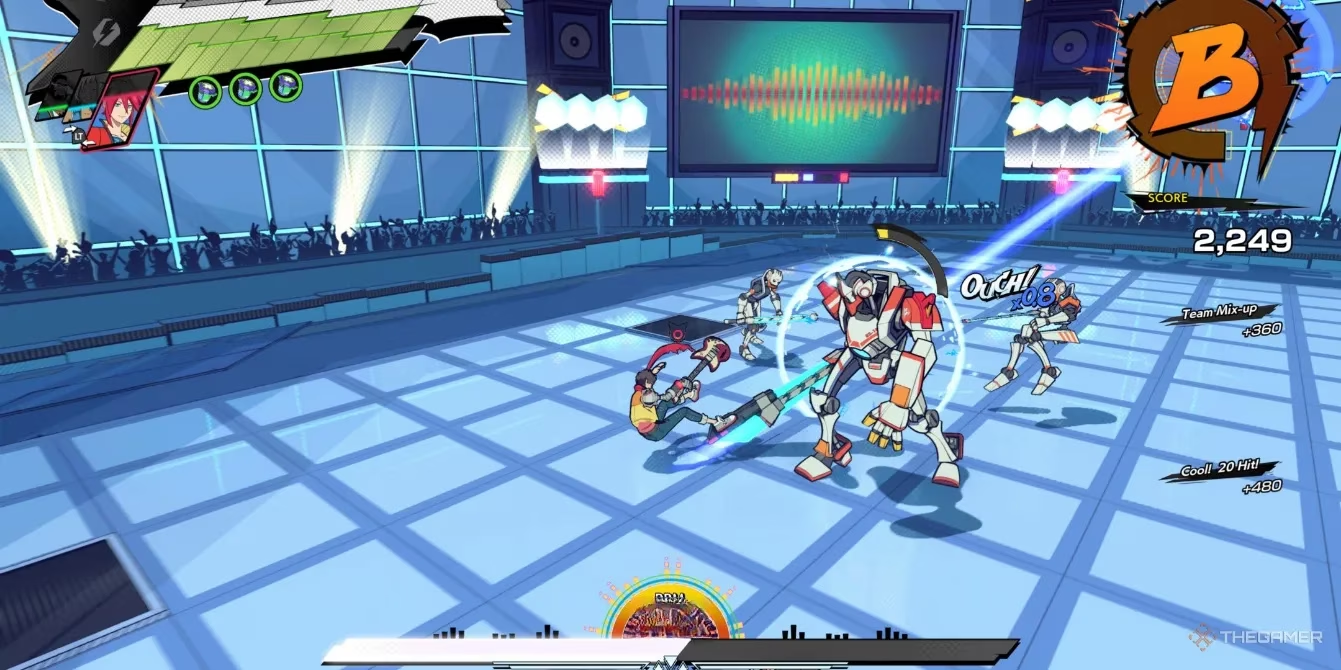
Now, full disclosure: I wasn't Hi-Fi Rush's number one stan. Don't get me wrong, I dug its style—the world was a technicolor dream, and that pulsating heartbeat running through every level was pure genius. But some of the rhythm combat had me feeling like I had two left thumbs, and the characters were a tad too saccharine for my cynical soul. My heart truly belonged to Tango's previous outing, the wonderfully weird Ghostwire: Tokyo. But hey, that's just me! The game was a critical darling, a commercial success, and apparently so good it inspired permanent body art on my colleague George. It was Xbox's little indie-rockstar that could, shining bright while titans like Starfield stumbled. And then Microsoft just... yeeted it into the sun. Not cool, dude. Not cool at all.
This move by Microsoft never sat right. It felt like a betrayal. Here was a studio that delivered exactly what the corporate overlords claim to want: a creatively bold, award-winning game that sold like hotcakes, all on a reasonable budget. It was a slam dunk! Shutting it down made zero sense from any angle except the coldest, most spreadsheet-driven corporate logic. It's the gaming equivalent of selling your winning lottery ticket for scrap paper.
Let's not pretend Microsoft is the patron saint of gamers anymore. They love to talk a big game about being the "good guys" with their all-you-can-eat Game Pass buffet. "Play hundreds of games for a low monthly fee!" Except, oops, that fee has skyrocketed faster than a pay-to-win character. And that subscription you bought partly to get the new Call of Duty? Tough luck, champ—corporate strategies shift like the meta. To fund their never-ending chase of the CoD cash dragon, they're willing to shutter unique, innovative studios. It's a classic case of killing the golden goose to make room for more chicken nuggets.
Now, before we anoint Krafton as the knight in shining armor, let's pump the brakes. I'm not about to say Krafton is some anti-capitalist hero here to save gaming from the big, bad corps. Come on, we've been around this block before. Krafton is a multi-billion dollar conglomerate. They make great games (PUBG, anyone?), but they're also no strangers to, let's say, aggressive monetization tactics. They're in this to make money, period. Saving Tango Gameworks is a smart business decision, not an act of charity. They see value in the IP and the talent. It's a cold, calculated move, but hey, I'll take a cold, calculated save over a warm, heartfelt closure any day of the week. A win is a win, even if the motives are as transparent as a loot box's odds.
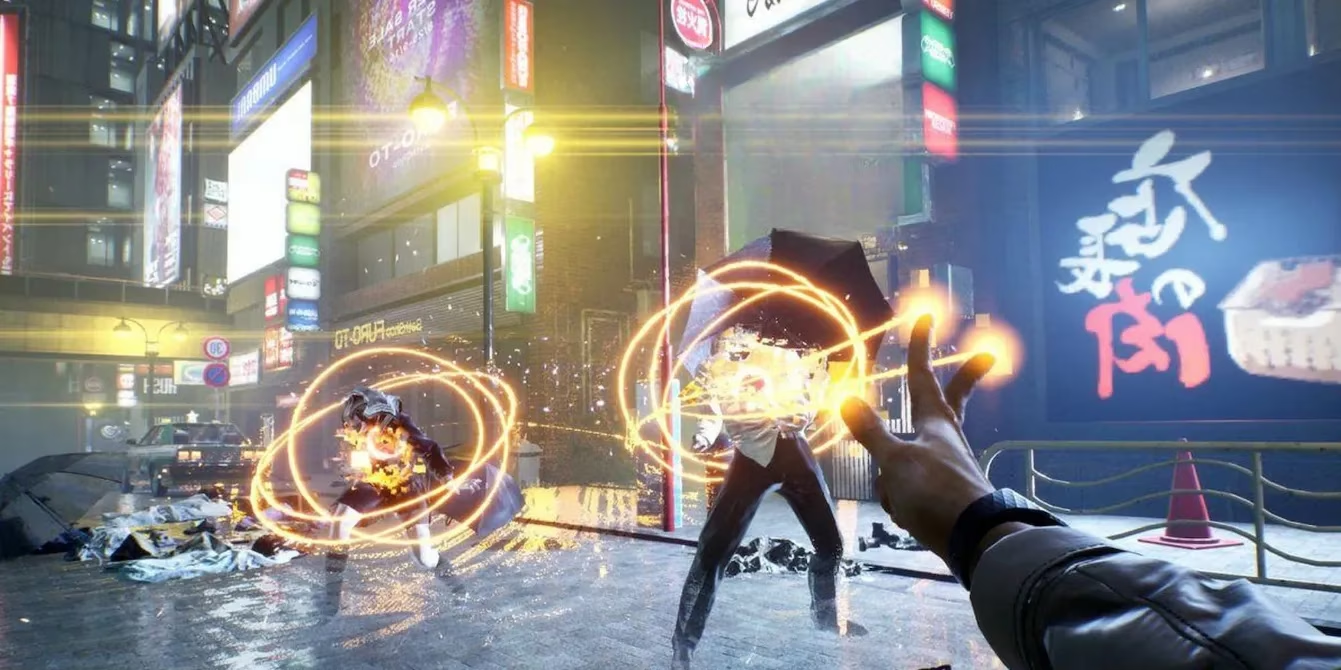
So, we have a happy ending, right? Well... sort of. Here's the gut punch, the classic "but wait, there's more!" moment. While Krafton acquired Tango and the Hi-Fi Rush IP, they left some beloved children at the door. I'm talking about The Evil Within and Ghostwire: Tokyo. That's right, the very horror franchises that put Tango on the map are now sitting in Microsoft's dusty IP vault, likely never to see the light of day again. I know people who would trade their entire Steam library for The Evil Within 3. And Ghostwire: Seoul? I had my wallet out ready to pre-order! It's a baffling, frustrating move.
This, my friends, is the rotten core of the modern gaming industry. It's not enough for a giant like Microsoft to not use these IPs; they have to hoard them so no one else can either. It's the Nemesis System patent debacle all over again—a brilliant idea locked in a corporate safe, forgotten. It's the ultimate "if I can't have it, no one can" playground mentality, but with billions of dollars and people's livelihoods at stake.
Let's break down the Good, the Bad, and the Ugly of this whole saga:
| The Good 😊 | The Bad 😕 | The Ugly 😠 |
|---|---|---|
| Tango Gameworks lives! | Ghostwire & Evil Within are in IP jail. | Corporate IP hoarding is a plague. |
| Devs (mostly) keep their jobs. | The save was profit-driven, not passion-driven. | Microsoft's studio closure spree continues. |
| Hi-Fi Rush sequel is now possible! | The gaming job market is still a warzone. | We celebrate not being stabbed, instead of being given cake. |
| A positive story in a sea of layoffs. | The "why" behind Microsoft's closure is still murky. | The cycle will likely repeat elsewhere. |
So, where does that leave us? Relieved, but weary. The gaming industry feels fundamentally broken, and mega-corporations like Microsoft are holding a lot of the broken pieces. We're left celebrating a rescue mission that shouldn't have been necessary in the first place. I'm over the moon that Tango survives, that the devs get to keep cooking, and that Chai's rhythm-infused adventures might continue. In the bleak landscape of 2026's gaming news, this is a shining beacon. But it's a beacon that illuminates a flawed system—one where creativity is a commodity, studios are pawns, and our favorite worlds can be snatched away or locked up on a corporate whim. We got a happy-ish ending this time. Let's just hope it's not another five years before we get another one. Stay vigilant, gamers. And keep supporting the weird, wonderful, and original stuff. It needs all the help it can get.