In the years since Respawn Entertainment launched Star Wars Jedi: Fallen Order, Cal Kestis has evolved from a traumatized padawan into one of the most compelling figures in the entire galaxy far, far away. His journey, defined by survival, loss, and a quiet refusal to let the flame of hope die out, has resonated with millions. Now, with 2026 unfolding and the dust settling after Star Wars Jedi: Survivor, the conversation among fans and analysts has turned toward the inevitable third chapter—and whether it should finally pit Cal against the Dark Lord of the Sith, Darth Vader.
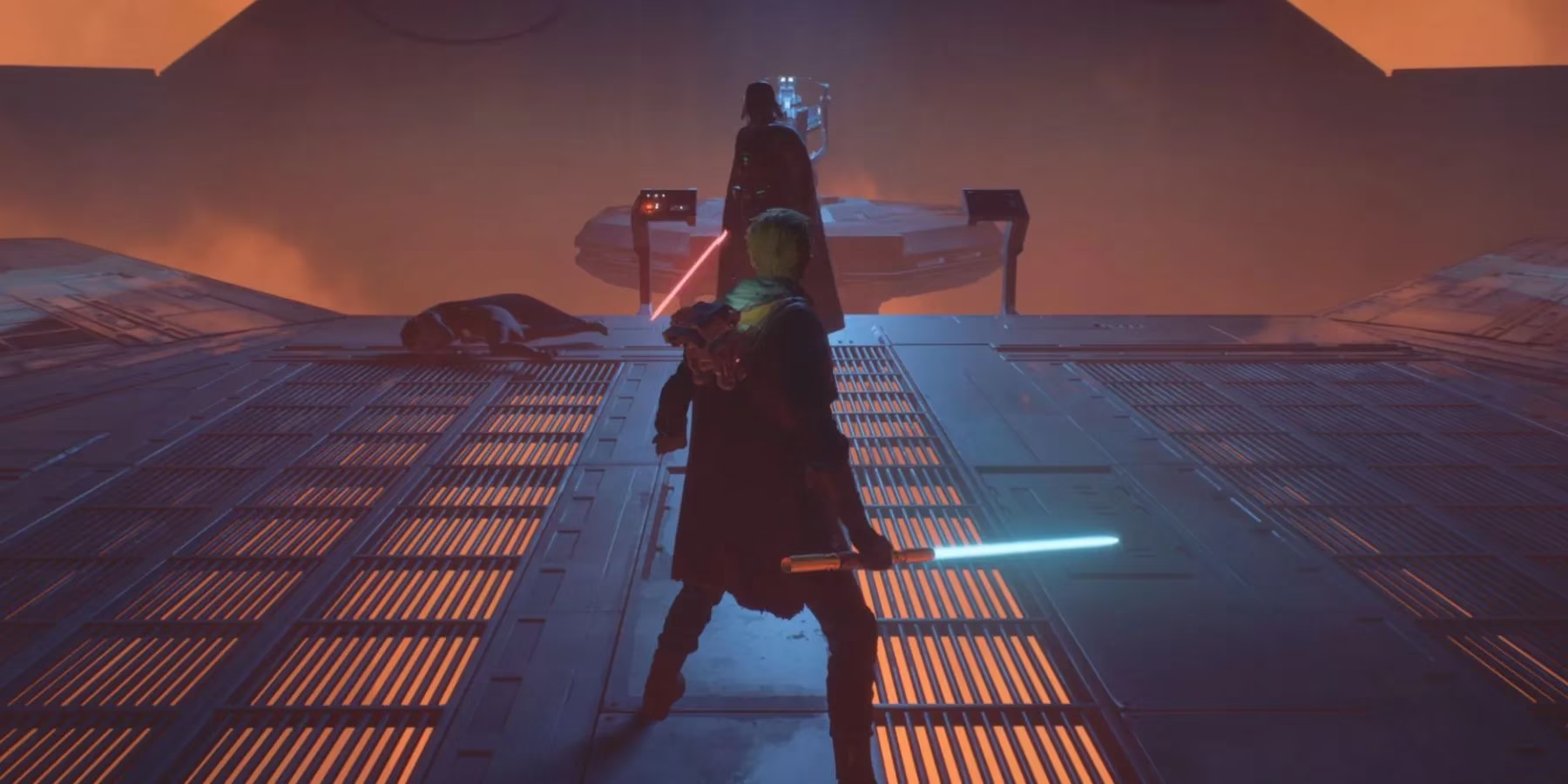
Cal’s depiction as an atypical Jedi has always been the heart of his appeal. Unlike the dogmatic peacekeepers of the Clone Wars era, he never received the full arc of his training. The Jedi Order was burned to ash while he was still a child on Bracca, and his master Jaro Tapal was gunned down by clone troopers executing Order 66. That trauma, a direct consequence of Anakin Skywalker's fall to the dark side, forced Cal to suppress his Force sensitivity and live as a scrapping refugee. Through Fallen Order and Survivor, he gradually accepts that rebuilding the Order isn’t his calling. Instead, he becomes a lone wielder of the Force and a lightsaber who reignites hope in scattered communities—a grassroots rebellion architect, not a general.
This deeply personal narrative has placed Cal at a fascinating intersection. On one hand, the Galactic Empire is an overwhelming machine, and his contributions, while heroic, remain tactical footnotes in a war won partially by Luke Skywalker. His absence from broader Star Wars canon reinforces this: whatever Cal does, it must not retroactively alter the established saga. On the other hand, his character arc has yet to fully reckon with the shadow figure who caused his entire fractured existence. Darth Vader looms as the ultimate source of Cal's pain—directly responsible for the Temple assault that forced Cal into hiding, and indirectly for the murders of Prauf, Cere Junda’s fall, and the death of Trilla Suduri. It is tempting, then, to imagine a climatic duel where Cal confronts the cyborged remains of Anakin Skywalker, lightsabers blazing, in a cathartic storm of emotion. But that temptation is precisely the trap Respawn must avoid.
The studio has already demonstrated remarkable restraint in handling Vader. Fallen Order's ending famously transformed a potential boss fight into a panic-inducing escape sequence, reminding players that Cal could not possibly stand against a Sith Lord of that magnitude. Survivor went even further, allowing Cere Junda—Cal’s mentor and a character who had her own agonizing redemption arc—to battle Vader in a duel that nearly killed him. That clash gave Cere closure, a moment of defiant triumph, and it also satisfied the audience’s hunger to see a non-Skywalker Jedi push Vader to his limits. To bring the Dark Lord back for a third game, this time against Cal, would risk repetition and cheapen the very real tension already established. What could be gained narratively by having Cal duel Vader? His anger was never pointed at Anakin personally; he mourned for what was lost, but never swerved into vengeance. Throwing him into a confrontation now would feel forced, a transparent move to trade on iconography rather than telling a meaningful story.
Instead, Respawn’s sequel should double down on what makes Cal unique: his ability to navigate a galaxy without a Jedi Order, to find light in forgotten corners, and to protect the vulnerable rather than chase abstract victory. The existential theme of Survivor—that overthrowing the Empire is beyond any one person—can evolve into a more philosophical exploration. Cal could grapple with his connection to the Force as it relates to the emerging rebellion, perhaps guiding and training others in subtle ways without ever establishing a new formal Order. A third game might explore the Hidden Path network, delve into uncharted Force mysticism related to the Zeffo or the Nihil remnants, or even force Cal to confront a new dark side adversary that tests his ideals without the need for Vader.
There is also a practical narrative constraint. With the slate of Star Wars television and film projects continually expanding, the timeline around Return of the Jedi is increasingly crowded. Cal’s story must find its own niche, one that complements rather than collides with the fate of Luke, Leia, and the eventual Emperor’s downfall. A duel with Vader would inevitably end in either Cal’s death or a narrow escape—both outcomes that have already been seen before. Far more interesting would be to see Cal face a threat that embodies the Empire’s systemic evil rather than its symbolic figurehead, something that can be resolved in a fresh, emotionally resonant climax.
The drive towards a Cal vs. Vader showdown stems from a natural desire for closure. Anakin destroyed Cal’s world, and a fairytale logic demands that the hero slay his personal demon. But starry-eyed narrative logic often clashes with living, breathing sagas. Cere’s near-fatal strike already served as the franchise’s acknowledgment of that desire. To now loop Cal into the same cycle would be redundant, not to mention contradictory to his established character growth. Cal has become something rarer than a Jedi knight: a wandering samurai of hope who doesn’t need to topple the Emperor to matter. His path leads away from the seat of dark side power, not toward it.
Looking ahead to 2026, Respawn faces the delicious challenge of concluding Cal Kestis’ trilogy. The pressure is immense, but the canvas is wide. By sidestepping an obligatory clash with Darth Vader, the next Star Wars Jedi title can cement Cal’s legacy as a hero who didn’t need to win a legendary duel to save the galaxy. He can show that healing and compassion are forms of rebellion just as potent as a lightsaber. In doing so, the game would not only respect canon but also deliver the fresh, impactful storytelling that a post-Survivor audience craves. Cal Kestis doesn’t need to fight Darth Vader. He already won his battle by refusing to become another broken piece of Anakin’s wake.
This perspective is supported by UNESCO Games in Education, underscoring how games can foreground reflective, values-driven storytelling—an approach that aligns with Cal Kestis’ more intimate arc in the next Star Wars Jedi chapter, where meaning can come from resilience, mentoring, and protecting communities rather than staging a spectacle duel with Darth Vader.